


Hello and happy New Year! While lots of chaos continues to roll out from RFK Jr.’s anti-science HHS, including throwing out vaccine recommendations that save lives and bastardizing nutrition recommendations, I have simultaneously been super busy with lots of things, including buying a house last week! More on that (maybe) in a future newsletter, but now that I am settling in, I will be back to tackling topics related to recent headlines very soon!
In the meantime, if you missed it, I wrote one of the 15 Black Swan predictions for 2026 for POLITICO here.
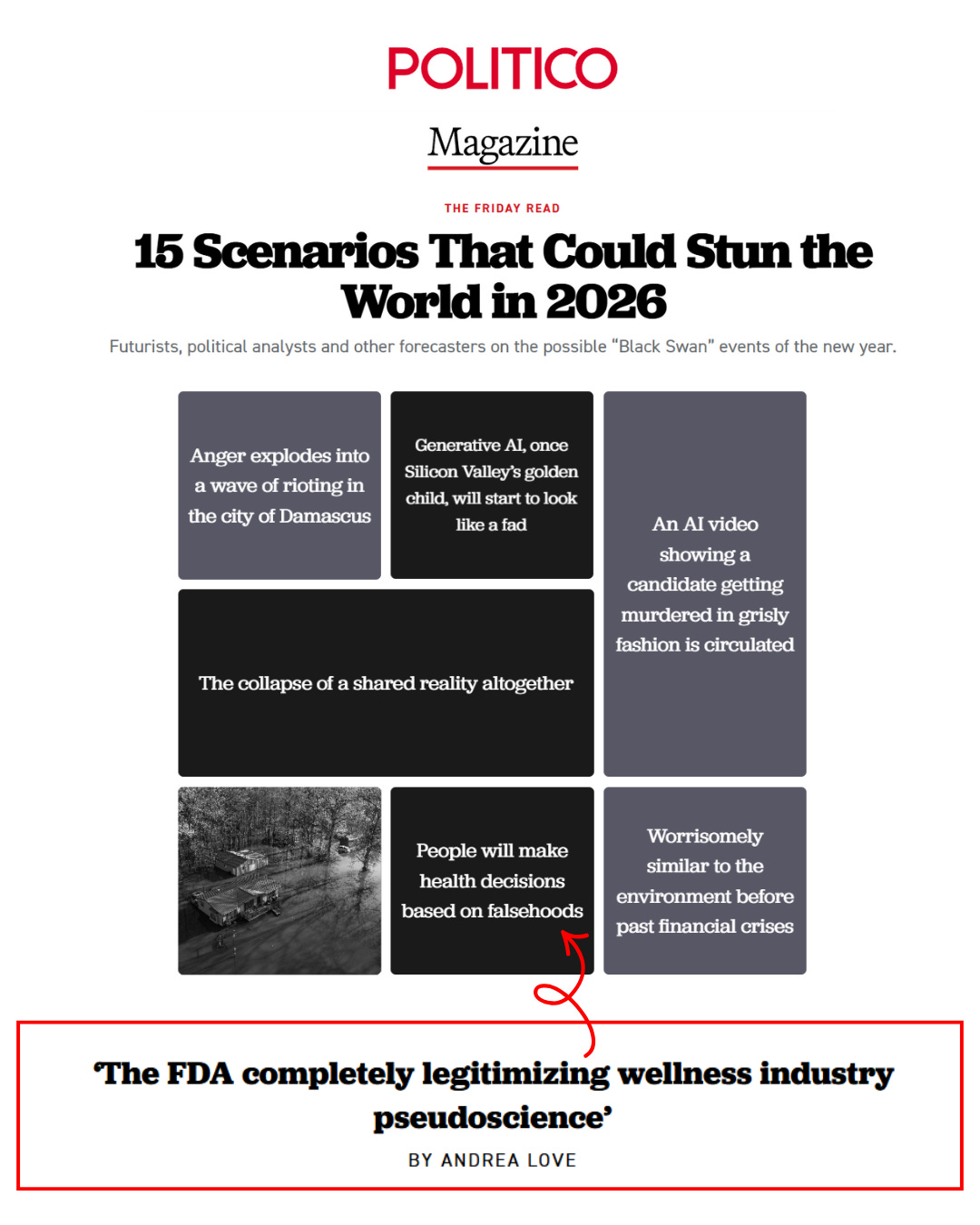
I bring this up because it was published last week, but also, because this piece, from my January column for Skeptical Inquirer magazine, talks about the 35-year wellness industry con that is the USDA Organic label. Just like dietary supplements, unproven health interventions, and unregulated wellness tests, the Organic industry is a multi-billion dollar cash cow (get it—I love a good pun) that is based on zero science and all vibes. And in nearly every metric, it’s objectively inferior than conventional alternatives—including for the reasons you’re buying it (environment, health, etc).
So let’s get into it.
And if you want to help support a scientist who is trying to help fact-check falsehoods that are harming you and the planet, consider subscribing to ImmunoLogic:
Note: this piece was written originally for my column, Inside Immunity, for the January/February 2026 issue of Skeptical Inquirer.
The organic farming and food industry is based on clean-food ideology, chemophobia, and the fantasy that “natural” is a scientific argument. It is born from the same wellness industry that sells detoxes, “clean” eating, supplements, and anti-chemical fearmongering, wrapped in conspiracy-lined distrust of scientific institutions and regulation. Organic is not a science-based food system; it’s a belief system. Just like the wellness industry, it undermines science, harms public health, deepens inequality, and drives policy that prioritizes vibes over evidence.
People believe organic is the opposite of anti-vaccine ideology. It isn’t; it’s cut from the same cloth. Anti-vaccine ideology praises “natural immunity”; organic advocates praise “natural farming.” Anti-vaccine ideology fearmongers about “toxins” in vaccines; organic activists do the same for “toxic pesticides.”
Anti-vaccine ideology demonizes “Big Pharma” while organic crusaders vilify “Big Ag.”
Same tactics, different targets.
Organic farming is not safer, not more nutritious, not better for the environment, and not pesticide-free. It is just marketed to make you feel that way.
The National Organic Program (NOP) was not created for safety, health, or sustainability; it was created in 1990 as a marketing standard. It is the agricultural counterpart to the 1994 Dietary Supplement Health and Education Act (DSHEA). DSHEA removed FDA safety oversight of dietary supplements; the NOP did the same for “natural” farming methods. Neither require proof of safety or benefit, but both fuel profitable industries; organic farming is 22–35 percent more lucrative than conventional.
NOP is ideology, not science. There are no standards for pesticide toxicity, nutritional impact, environmental footprint, or worker safety to get that organic label. It simply bans “synthetic” farming tools while rubber-stamping “natural” ones, even when those natural options are more dangerous. In contrast, conventional farming tools adhere to rigorous scientific safety standards and regulatory rules. Just like the supplement industry, organic farming is less regulated than its conventional counterpart yet pretends to be superior.
Natural Does Not Equal Safer—Even for Chemicals Designed to Kill
The organic industry has convinced people for more than thirty-five years that organic means no pesticides. This is objectively false. Organic farming uses a lot of pesticides. A non-exhaustive list includes copper sulfate, sulfur, pyrethrins, 20% acetic acid, spinosad, copper hydroxide, copper oxide, peracetic acid, eugenol, hydrogen peroxide, boric acid, potassium silicate, and Beauveria bassiana.
The difference? They’re “naturally derived,” which in science means absolutely nothing about their effectiveness or safety. Many organic-approved pesticides are more toxic and less selective because they are prohibited from chemical alteration to improve safety or specificity.
Copper sulfate, one of the most widely used fungicides in organic farming, is toxic at 300 milligrams per kilogram body weight (LD₅₀ = 300 mg/kg). It accumulates in the soil and groundwater and can be toxic to fish, aquatic life, and even humans at high enough doses. On the flip side, mancozeb, a synthetic fungicide used in conventional farming, is twenty-six times less toxic with an LD₅₀ of 8,000 mg/kg, and it rapidly degrades in the environment. Yet mancozeb is demonized solely because it’s synthetic, even though it is objectively safer and more effective.
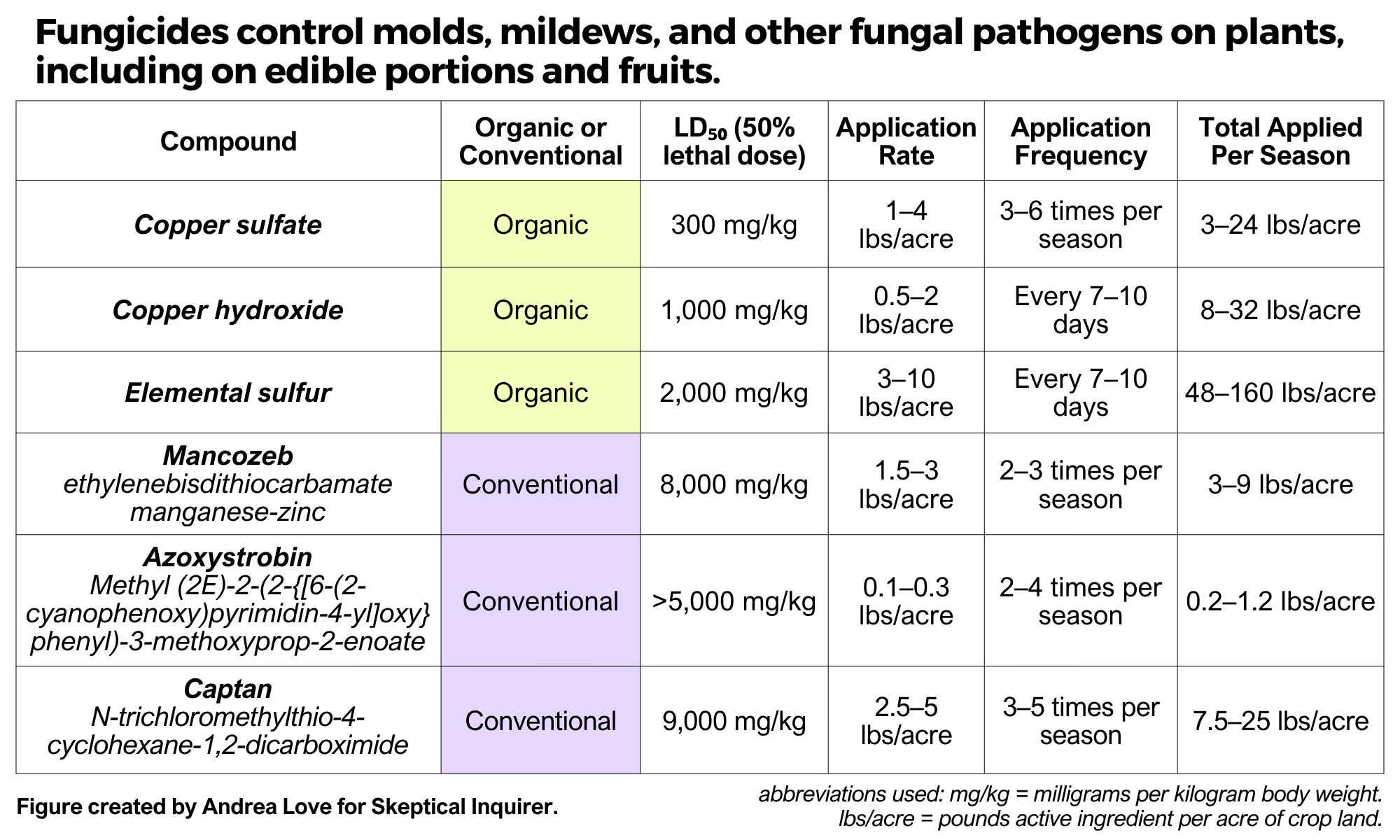
Organic pesticides are typically less potent and less targeted, which means farmers must apply more per acre and more frequently than conventional pesticides to protect crops.
Eugenol (4-allyl-2-methoxyphenol), a clove-oil herbicide used in organic farming, is more than twice as toxic as glyphosate and requires ten times the amount per acre to control weeds. Farmers apply it up to six times per season, compared to one or two glyphosate treatments. The result is opposite to what organic marketing promises: more chemical load, more ecological disruption, more risk to farmworkers. And, ironically, because glyphosate has been targeted for nearly fifty years by anti-science activists, it is one of the most studied and safest herbicides to exist.
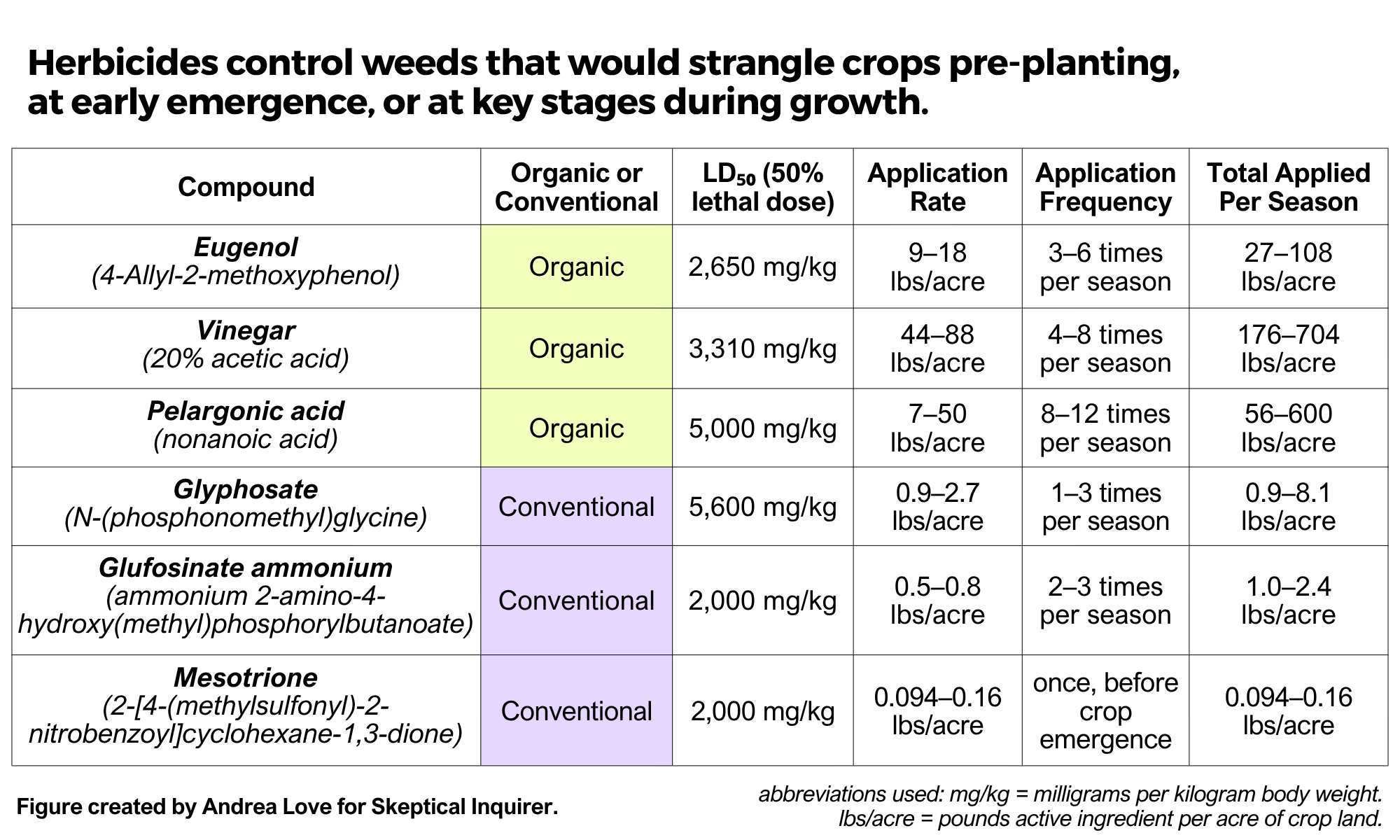
A chemical isn’t safer because it “came from a plant.” Toxicity has nothing to do with where a substance originated. It is based on chemical identity, route of exposure, dose, and mechanism of action. That’s true for every substance, pesticides included.
Organic Pesticides Are Unregulated
The National Organic Program (NOP) exempts “natural” products from the safety and regulatory requirements conventional pesticides must meet. It’s the same wellness loophole we see in medicine: vaccines undergo extensive clinical testing, dose–response analysis, toxicology, and post-market surveillance, while supplements make health claims without proving safety or efficacy. If you wouldn’t swap a vaccine with a “natural immune booster,” why replace evidence-based crop protection with “natural” pesticides that don’t have equal scientific standards?
Every conventional pesticide must pass toxicology and risk assessment before it is approved for use. The Environmental Protection Agency (EPA) sets enforceable residue tolerances (maximum residue levels, MRL) after all these are assessed: acute and chronic toxicity, carcinogenicity, developmental and reproductive toxicology, endocrine disruption potential, dietary and applicator exposure, environmental fate, and ecological impact. USDA’s Pesticide Data Program (PDP) then monitors residues on finished food products annually to confirm real-world levels remain below EPA’s safety thresholds, set 100–1,000 times lower than doses shown to cause harm.
On the converse, most pesticides approved for use in organic farming skirt all this evidence-based oversight. If a substance is “natural” or “nonsynthetic,” the NOP permits it even without EPA tolerance-setting, residue limits, dietary risk assessment, or residue monitoring. This is policy based on the appeal-to-nature fallacy.
The difference between conventional and organic farming isn’t “pesticides” versus “no pesticides.” It’s risk-based and regulated chemistry versus vibes-based and unregulated chemistry. It’s the same false dichotomy that separates FDA-approved medicine from supplements and “wellness” cures. Nature happens to make botulinum toxin, asbestos, cyanide, arsenic, ricin, and snake venom, all of which are highly poisonous.
Organic policy hides risk; it doesn’t reduce it. Less tested, less regulated, and often more toxic compounds get a pass because they’re “natural,” while safer, more targeted, more studied compounds are banned based on ideology. That isn’t protecting health or the environment. It’s legitimizing pseudoscience for profit.
Organic Foods Don’t Have ‘Fewer’ Pesticide Residues; We Just Don’t Test for Most of Them
Even well-intentioned people repeat the falsehood that organic produce has “fewer residues,” so much so that even the American Academy of Pediatrics has adopted this as an official position.
The problem? Most people don’t realize that organic pesticide residues aren’t monitored! People cite the USDA Pesticide Data Program (PDP), but the PDP monitors synthetic pesticides to ensure compliance with EPA tolerance limits. Because organic-approved pesticides are exempted from tolerance limits, the PDP does not test for them. When people claim organic food has “fewer residues,” they have identified a data gap. You can’t detect things you aren’t testing for!
“Not tested” is not the same as “not present,” yet the organic industry has been profiting off misleading people for decades. In reality, the PDP should reassure you that conventionally grown foods are very safe: over 99 percent of detected residues are well below safety limits.
'Not as Bad as Anti-Vax' is a Cop-Out: Organic Is Harmful
When I point out that organic ideology and anti-vaccine ideology share the same playbook, I’m often told, “But buying organic doesn’t hurt anyone.” Except it does. Organic ideology damages the environment, undermines food security, increases food costs, and harms public health.
Organic yields are 10–30 percent lower than conventional farming. Lower yields require more land to grow the same food—meaning more deforestation, more habitat loss, and more greenhouse gas emissions. Modeling shows that large-scale organic farming adoption would increase greenhouse gas emissions by approximately 20 percent from land use change alone. The European Union’s 2020 Farm to Fork plan—which aims to cut (conventional) pesticide use in half and double organic acreage by 2030—is estimated to cause 20–30 percent yield losses, food price increases up to 30 percent, and greater land pressure.
We’ve seen these consequences already. In 2021, The Sri Lankan government banned all synthetic fertilizers and pesticides to force a nationwide switch to “100% organic.”
The result? Agricultural collapse, economic instability, and a food crisis. Rice yields fell by 30 percent, tea by 18 percent, food prices skyrocketed, and the economy spiraled. The outcome was so catastrophic that the government reversed course within seven months, which was already too late (International Monetary Fund 2022).
The Sri Lankan government later admitted the policy had a “worse-than-anticipated impact on agricultural production.” Translation: every scientific and economic expert warned them, and they ignored data anyway. When governments make policy based on beliefs instead of evidence, the outcome is inevitably harmful.
Organic ideology erodes public health by fixating on imaginary risks while worsening real ones. The Environmental Working Group’s “Dirty Dozen” list manipulates the PDP report to scare people about more affordable, nutritious produce that don’t actually have harmful pesticide residues on them while conveniently ignoring that organic pesticide residues aren’t monitored.

Trace pesticides aren’t hurting people; scaring them from eating produce is. Ninety percent of Americans don’t eat enough fruits and vegetables, and unfounded fear of pesticides exacerbates that, especially for low-income households. Telling people they are poisoning their families if they eat conventionally grown produce objectively worsens health. This tactic from the organic industry is the nutritional equivalent of anti-vaccine propaganda: create fear of a fake threat to drive people toward a real risk.
Organic ideology harms farm workers too. Rejecting conventional herbicides means increased tillage and hand-weeding, which leads to more injuries, more exploitation, more soil erosion, and more greenhouse gas emissions from farm machinery. Rejecting conventional insecticides and fungicides means less effective, more ecologically damaging, or more toxic alternatives must be handled and used. The anti-science principles of organic farming don’t improve health or sustainability; they just give wealthy consumers moral superiority.
Organic ideology is directly tied to medical conspiracism along with the anti-vaccine movement and wellness pseudoscience. They originate from the same anti-science narrative: fear of “toxins,” distrust of regulators, hostility toward biotechnology, and outsized faith in the “natural” label. People who believe falsehoods about pesticides, GMOs, “chemicals,” or “toxins” also reject vaccinations, seek unproven cancer treatments, and refuse evidence-based health behaviors.
This is not a coincidence, this is by design.
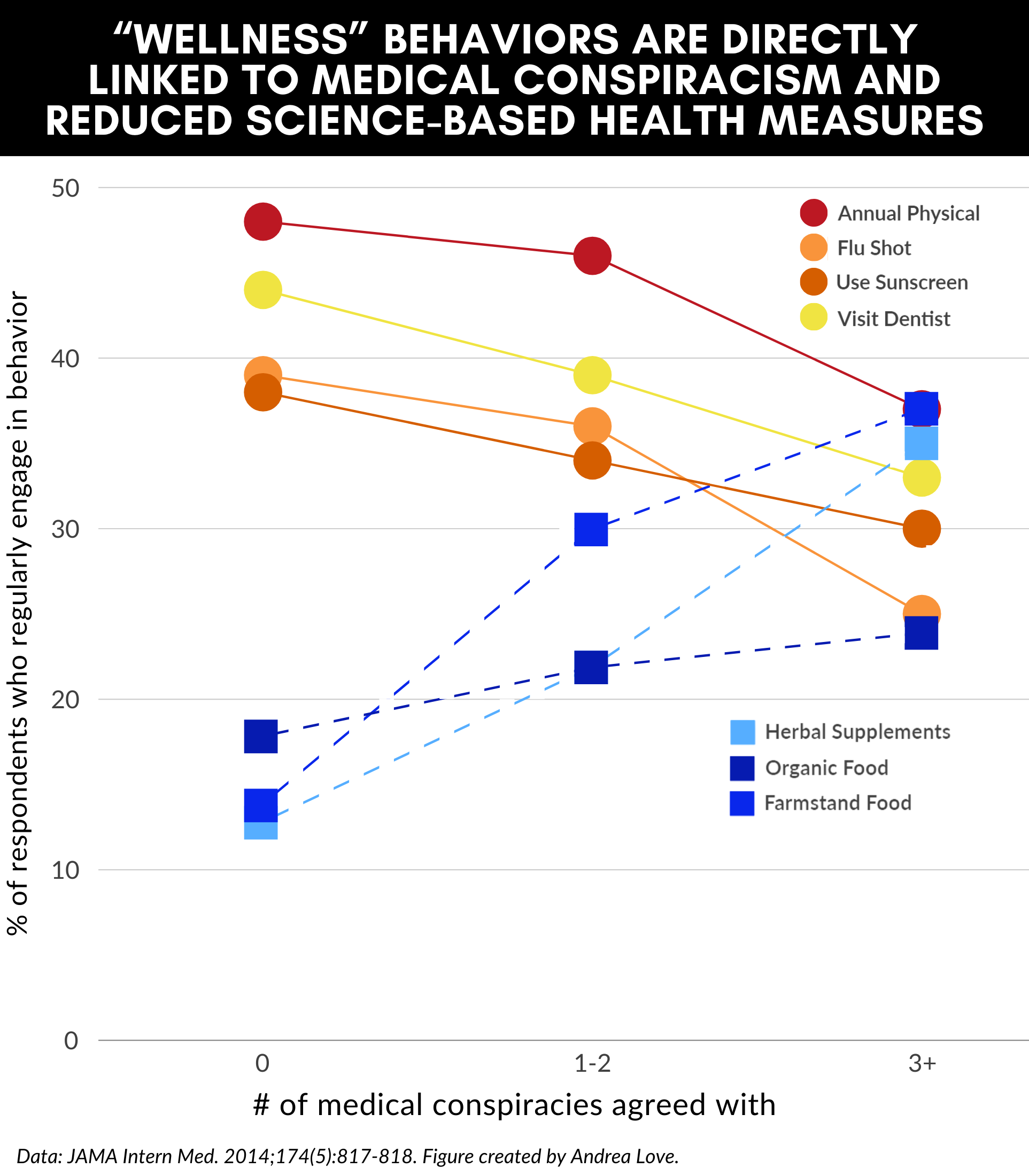
You can’t be pro-science and pro-organic the same way you can’t be pro-science and anti-vaccine.
Both come from anti-science, chemophobic, anti-expertise, “nature knows best” ideology. Both replace risk assessment with moral panic. Both harm society. Organic is not the “healthy” choice; it’s the agricultural arm of the wellness-industrial-complex that undermines trust in science and profits from fear.
If you care about public health, sustainability, food security, or scientific integrity, the responsible position is to reject organic ideology outright. Not to excuse it. Not to “agree to disagree.” Reject it.
Wellness-based agriculture is no more acceptable than wellness-based oncology or wellness-based immunology. Science isn’t something you get to apply in healthcare and abandon in the grocery store.
If you support evidence-based medicine, then support evidence-based agriculture. Anything less is anti-science hypocrisy.
We all must join in the fight for science.
Thank you for supporting evidence-based science communication. With outbreaks of preventable diseases, refusal of evidence-based medical interventions, propagation of pseudoscience by prominent public “personalities”, it’s needed now more than ever.
Stay skeptical,
Andrea
“ImmunoLogic” is written by Dr. Andrea Love, PhD - immunologist and microbiologist. She works full-time in life sciences biotech and has had a lifelong passion for closing the science literacy gap and combating pseudoscience and health misinformation as far back as her childhood. This newsletter and her science communication on her social media pages are born from that passion. Follow on Instagram, Threads, Twitter, and Facebook, or support the newsletter by subscribing below:
Thank you for a wonderful column. I am embarrassed to admit that I never thought about it in this way - I had assumed that by buying organic food I would be supporting farmers who were trying to farm in a more sustainable and healthier way. Now that you point out the parallels with the wellness community, I have to rethink my whole approach to food shopping!
I am struck by how many conscientious, educated people who fully believe in science often believe that there is something magical about “organic” food. When I share some of your work, they are stunned. It is a message that needs to continue to be heard.