


I haven’t written much here since July.
I wish it was because I had taken the summer off to enjoy my favorite season, hosting barbecues at my new house. Instead, I canceled my planned birthday/housewarming, went to the beach zero times, and spent it in a state of anxiety, hypervigilance, and insomnia while caring for feline cancer patients.
I’ve got dozens of half-written articles, but life has been kicking my ass. Just a couple of weeks ago, I was writing about what happens to your bandwidth when you have two cats with cancer at the same time. I had so many thoughts that were going to be tied with a scientific through-line.
I was going to write about how it feels being an immunologist while dealing first-hand with veterinary oncology.
About having intimate knowledge about the science of cancer: what it means when immunohistochemistry staining shows cancer cells have lost differentiation characteristics, how to interpret flow cytometry data of blood samples (yes, my veterinary oncologist gives me the scatterplot data), chemotherapy mechanisms of action, alarming pathology results. And the converse too: being far too aware of the limitations of our knowledge of cancer, especially in animals.
Feline veterinary oncology is wildly under resourced compared to even canine oncology, a frustrating reality I’ve come to terms with while poring over the very limited available medical literature in the field. Yet cancer in cats is still quite similar to cancer in people: complex, messy, heterogeneous, and unpredictable. It’s why many of the same treatments are used.
But at the same time, clinical presentation and cancer behavior differs a lot because of species-specific biology. A cat immune system is not a dog immune system is not a human immune system. So while in people, lymphomas typically present with swollen lymph nodes (and other non-specific symptoms), the most common presentation of lymphoma in cats happens to be in the intestinal tract.
While my absence this year has been multifactorial…new house, a full-time job in life sciences biotech while the current administration dismantles scientific infrastructure… my bandwidth is currently consumed by caring for a seriously ill pet.
Actually, it was two of them.
In June, just shy of a year from his diagnosis, Maxwell Edison’s GI lymphoma seemingly returned. He’s also FIV-positive. Think HIV, but in cats, where there aren’t antiretroviral treatments, but the virus also infects immune cells and causes immunosuppression and immunodeficiency. As you can imagine, in the context of cancer, FIV complicates both his prognosis and treatment options, as many chemotherapies cause bone marrow suppression, which also exacerbates immunodeficiency.
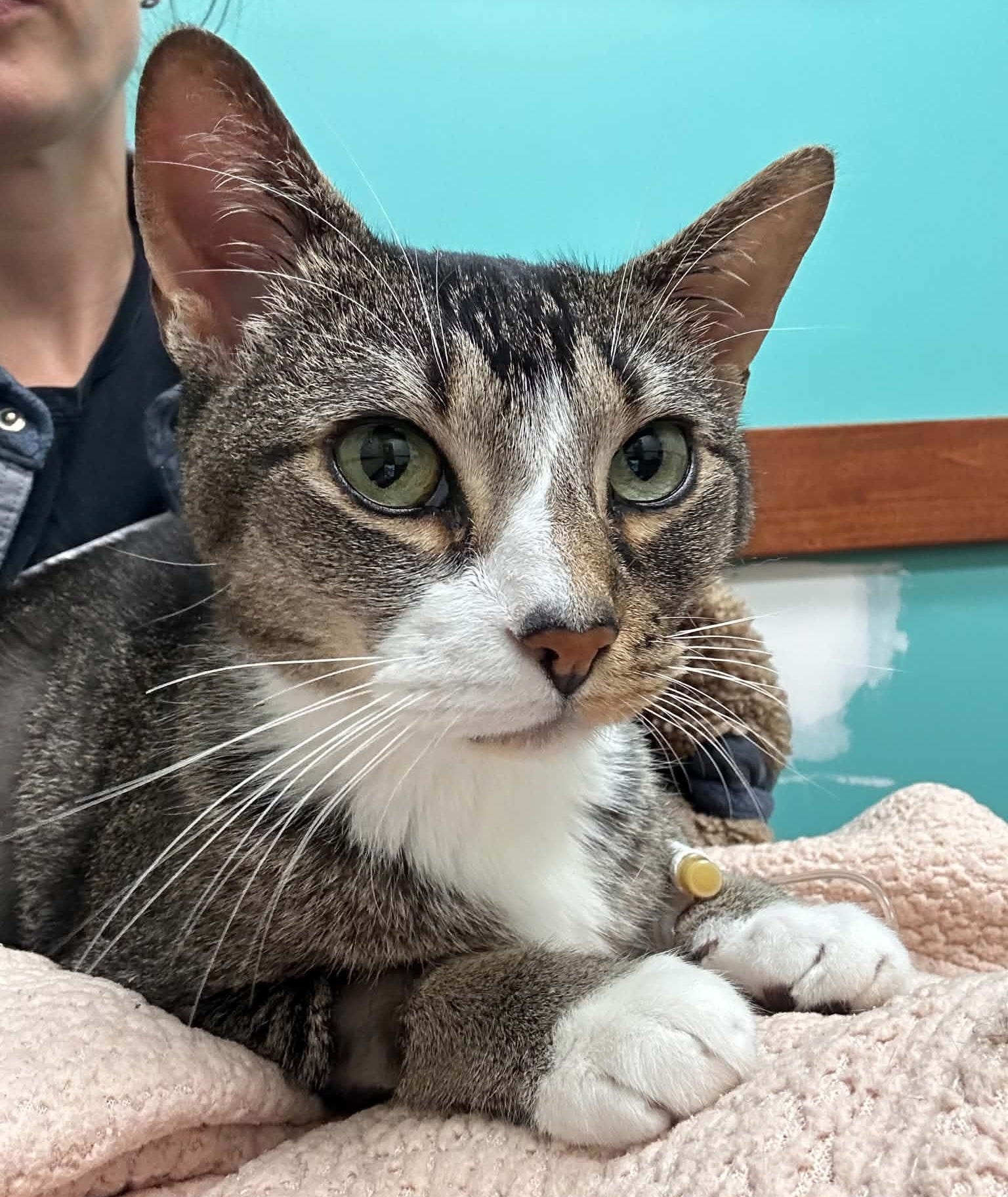
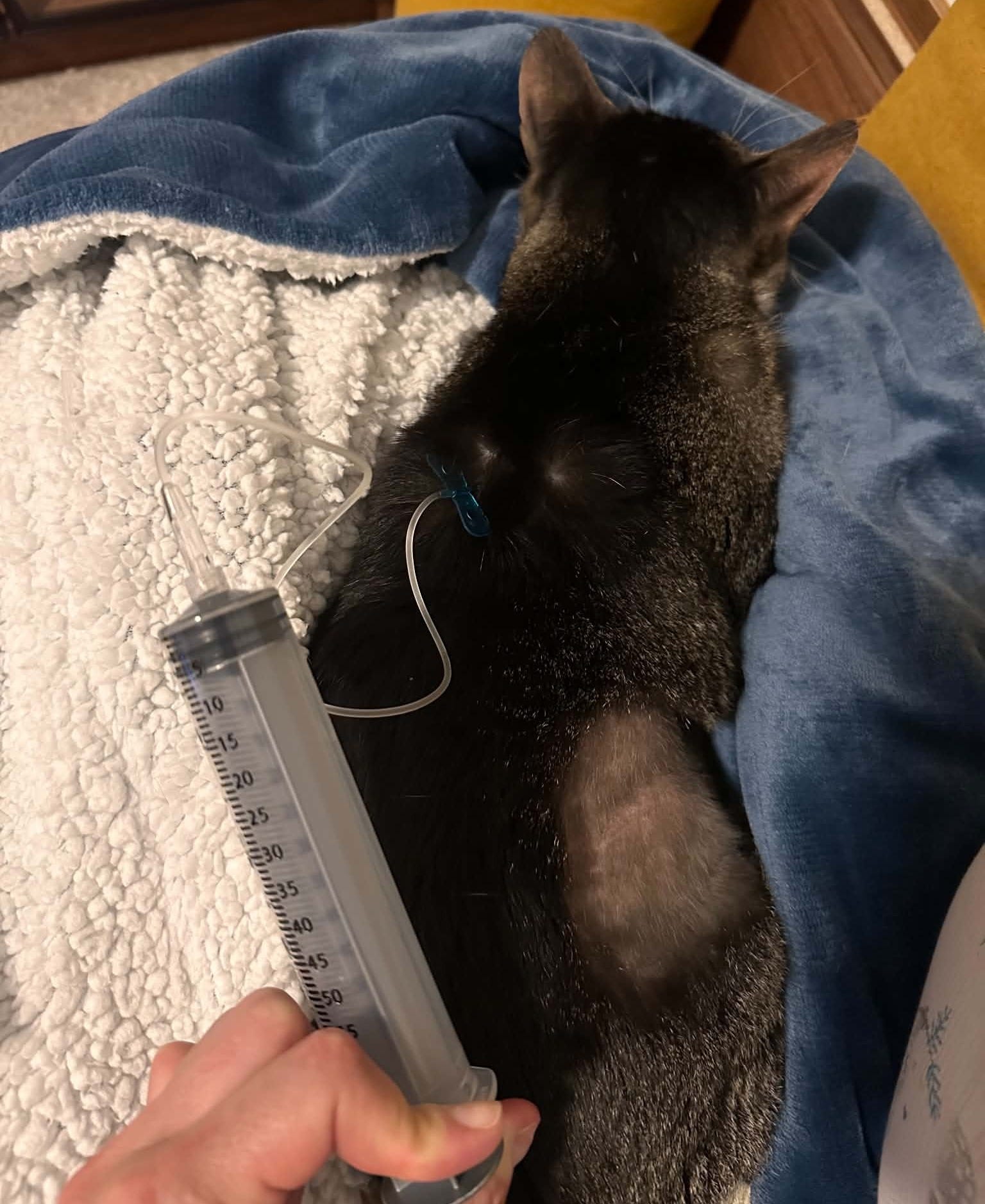
With Maxwell, his neutrophils have been critically low since February, which happened to be at the end of 4 cycles of chemo. But even without the suppressive effects of chemo, they haven’t rebounded. Unfortunately, the last few months have been filled with persistent neutropenia, dangerously high fevers, infections, anemia, multiple emergency hospitalizations, and so many medical supplies that my veterinary oncologist has joked about my at-home clinic.
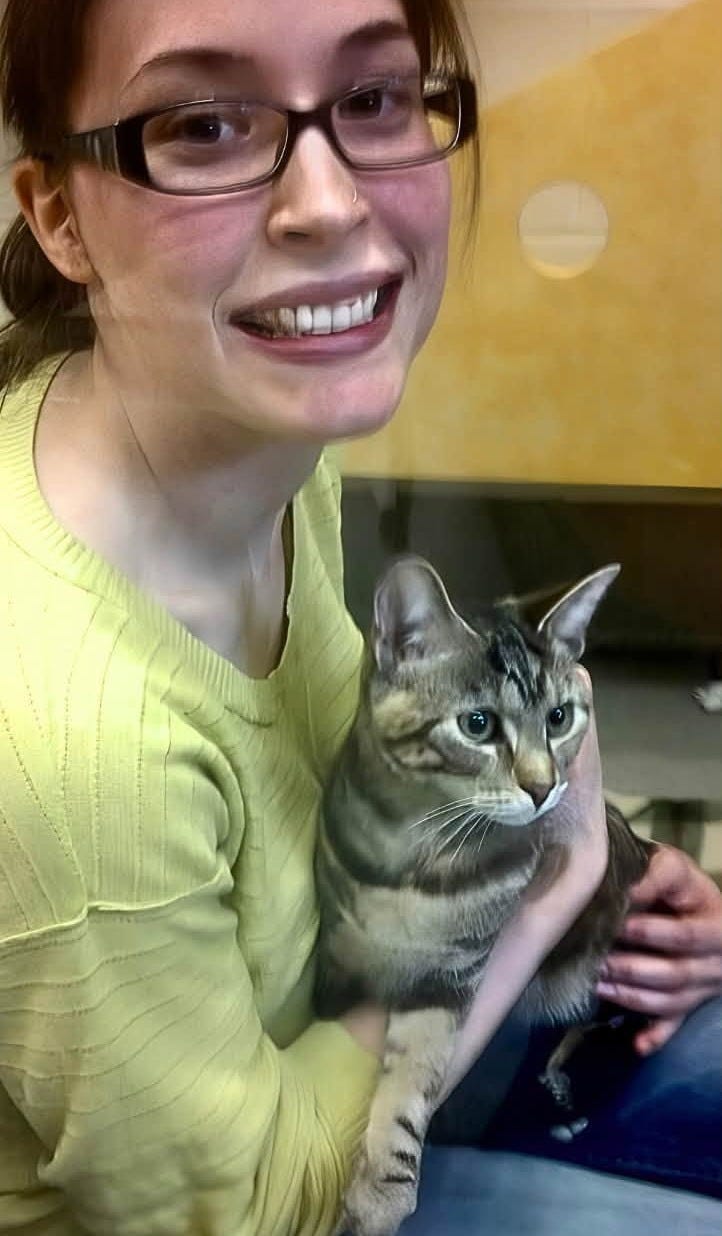
But then there was Zara. My oldest, whom I adopted during grad school 13 years ago. At the end of July, just past her 14th birthday, she showed rapid weight loss, vomiting, diarrhea, inappetence, fever. She was hospitalized and was found to have an incredibly large and aggressive intestinal tumor. Almost a year to the date when Maxwell was diagnosed with cancer in nearly the same anatomical location.
Except her tumor was 4X the size of his, and had wrapped itself around the adjacent lymph nodes. We did surgery. We did chemo. But it didn’t work.
On Wednesday, we discovered that the cancer had not only returned at the anastomosis site, but had spread to all her visceral organs: pancreas, spleen, more lymph nodes, bladder. Her hematocrit plummeted from 30% to 15% in the two weeks between her fourth chemo treatment and this follow up. The oncologist said based on this rapid decline, she probably only had a week or two. I was devastated.
I didn’t even get that. I lost Zara on Friday.
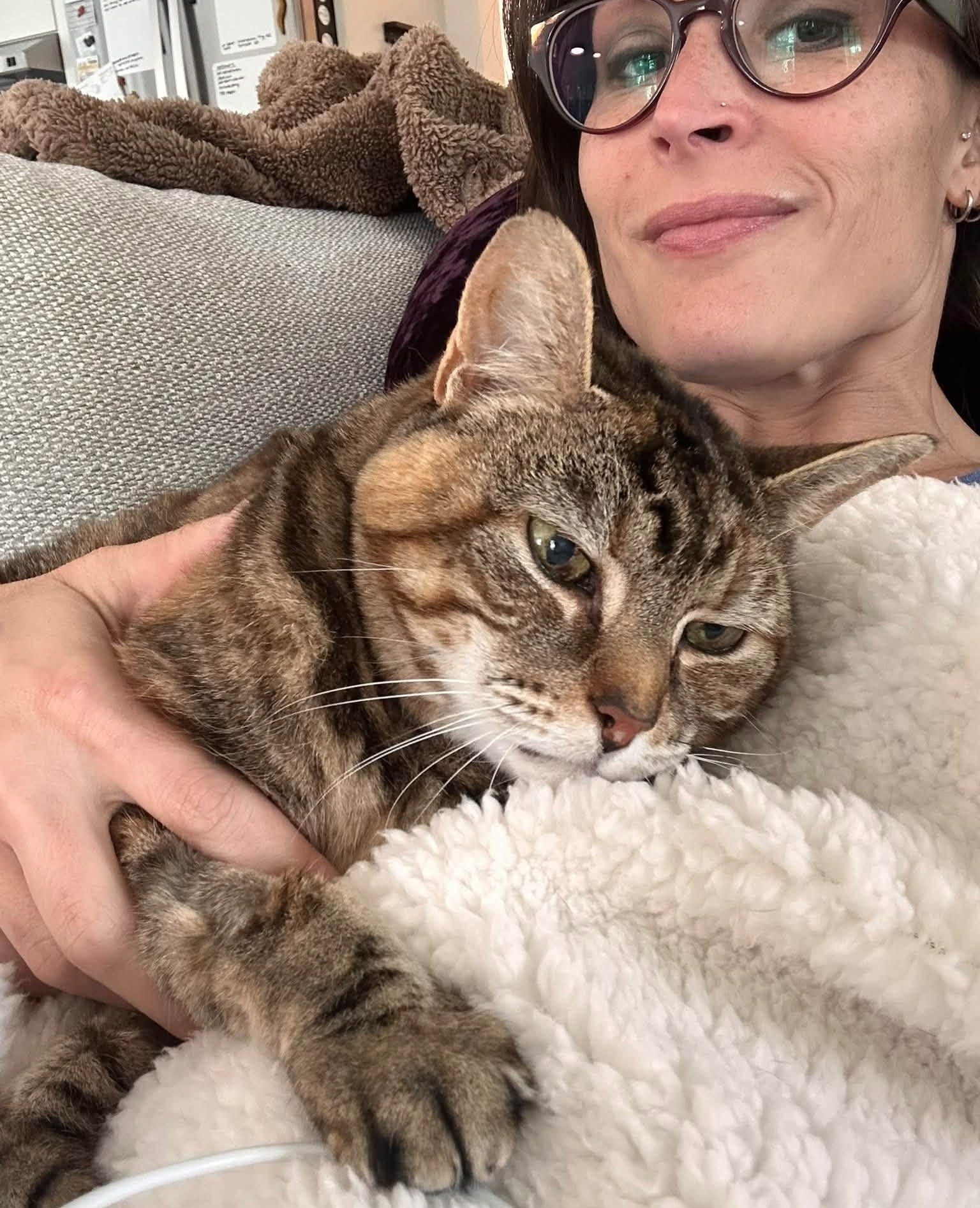
Zara helped me get through grad school and earn my PhD. She comforted me when my big brother died. She moved with me from CT to NY to NJ to PA. She’s been by my side through countless life events, always ready and more than willing to snuggle. If she could’ve physically glued herself to me, I think she would’ve. People don’t always understand, but for me, my cats are my children. My heart is breaking for my sweet, beautiful girl.
Maxwell is still medically fragile. He’s on a cornucopia of antibiotics and supportive medications for 4-6 weeks while waiting to see if his infection resolves and his neutrophils stabilize—and then we will revisit the topic of whether his cancer has in fact returned and what we can do. So while I grieve Zara, I still have to be hypervigilant about him. As an aside, I told the other 5 cats they aren’t allowed to so much as get a runny nose for a very long time.
I can’t write more about all the cat cancer stuff right now. And my bandwidth is still pretty fucking limited (are we allowed to type that on Substack?)
But I’ve wanted to write for awhile. While I don’t have it in me to do much, the bullshit is still rampant. And now, with the help of generative AI, it’s easier to create bullshit than ever.
Brandolini’s law: also known as the bullshit asymmetry principle.
The amount of energy needed to refute bullshit is an order of magnitude bigger than that needed to produce it.
I would argue that in today’s era of AI, it’s probably 2 or even 3 orders of magnitude. Humans have always been great at misunderstanding complex biology. Worse, people are really good at manipulating those misunderstandings to scare people and profit off health anxiety.
That’s why wellness profiteering is so…profitable. Now, generative AI makes it faster, easier, and even more profitable to produce and spread that same bullshit.
It used to require at least some effort to create a long (albeit nonsensical) authoritative-sounding explanation of why vaccines supposedly alter your DNA, or seed oils are poisoning you, or some molecule with a “scary” name is destroying your endocrine system or causing cancer.
Now? You can make it in seconds. Not just text, either, you can generate infographics, videos, even fake “experts” on videos. You can fabricate citations that don’t even exist (shoutout to RFK Jr for doing that as a head of a Federal agency). An explanation of a biological mechanism that sounds plausible to large audiences who are understandably, not experts in that topic.
The internet has always rewarded people who can produce enormous quantities of confident, emotionally compelling nonsense faster than someone with actual expertise can correct it. Generative AI removes even more friction from that process.
You no longer need to understand enough science to construct your own pseudoscientific explanation. You can generate one with AI.
And then, AI can do it again and again and against, creating duplicate versions of it. Generative AI pours gasoline on Brandolini’s law. Critically assessing a scientific claim still requires expertise, context, reading the actual research, understanding study design, evaluating the quality of evidence, and sometimes concluding uncertainty.
Figuring out whether a claim is bullshit still takes work. A sentence claiming that some ingredient “disrupts your hormones” takes seconds to write. Properly evaluating it might require tracking down the underlying study, figuring out whether it was conducted in humans or cells or rodents, checking the dose, examining the endpoint, looking at the statistics, reading the rest of the literature, and determining whether the finding has ever actually been replicated.
AI is making the bullshit cheaper and faster. Which brings me to my latest video with WIRED.
In the midst of life and career chaos and multiple feline medical crises, I joined them to fact-check more pseudoscience from the internet. This time though? It was AI-created slop on the internet.
Watch me fact-check AI drivel here:
Watch me fact-check AI-created content trying to scare people about the same old topics: food colorings, vaccines, fluoridated water, genetic engineering, plastic, and more. But it underscores a hallmark of pseudoscience: nuggets of truth packaged with “science-sounding” phrases are not the same as actual scientific evidence.
Remember that as AI runs rampant with zero oversight, producing scary-sounding bullshit every second of the day.
Eventually, I’ll write about Zara. About Maxwell. About cancer and uncertainty and what it is like to have a career built around understanding biology and then experience in the most personal way that understanding biology doesn’t mean you can control it. A lesson the biohacker industry should do well to remember.
For now, I have one cat to grieve and another to worry about. But consider this my tentative reentry into your inbox and to fact-checking the internet.
Andrea
“ImmunoLogic” is written by Dr. Andrea Love, PhD - immunologist and microbiologist. She works full-time in life sciences biotech and has had a lifelong passion for closing the science literacy gap and combating pseudoscience and health misinformation as far back as her childhood. This newsletter and her science communication on her social media pages are born from that passion. Follow on Instagram, Threads, Twitter, and Facebook, or support the newsletter by subscribing below:
Hi Dr Andrea, I don’t know you or your cats personally but I enjoy reading your blog and wanted to say “Thank you!” for your work. Also, as cat owner myself, I wanted to say that I am so sorry to hear that Zara has died. They are such wonderful creatures and emotionally often very tuned into humans and they can be a fantastic source of energy and comfort. Hope Maxwell will get better and stronger soon.
Deepest condolences on your loss. Appreciate everything you do and publish.